
Yoh! Bestie
Gender, Identity & Language in Netflix South Africa's urban comedy series.
Watch the Trailer
Get ready for the ultimate friendship test - Netflix's South African comedy series about two besties navigating life, love, and everything in between.
Show Overview
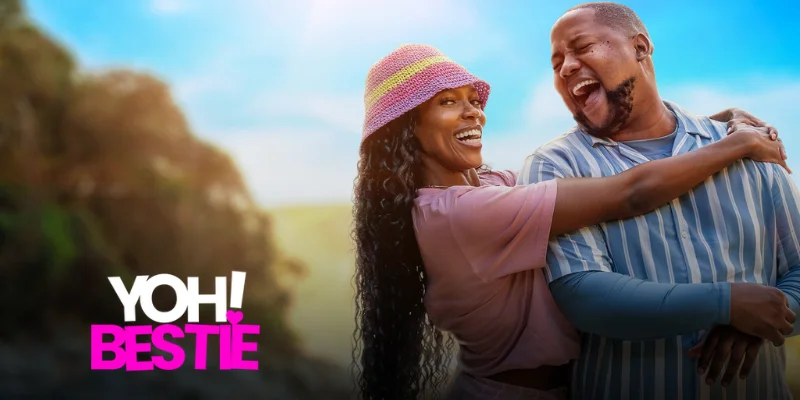
Yoh! Bestie is a Netflix South Africa comedy series following a group of young Black women navigating friendship, romance, and career in urban Johannesburg. It presents itself as a celebration of contemporary South African womanhood.
The show is vibrant, funny, and visually energetic. But beneath its celebratory surface lies a set of assumptions about what it means to be a young South African woman, assumptions that are worth interrogating.
Gender & Identity
The show centres women's experiences, a significant and welcome choice. Yet the femininity it represents is largely urban, aspirational, and heteronormative. The characters navigate romance, career, and friendship within a framework that rarely challenges dominant gender norms.
LGBTQ+ identities, non-binary experiences, and gender expressions outside the mainstream are largely absent. The show's representation of womanhood is expansive in some ways, but narrow in others.
"Representation is not simply about who appears on screen, but about how they appear, and on whose terms." Hall, 1997
Language & Code-Switching
Yoh! Bestie makes more use of South African vernacular than Blood & Water. Characters code-switch between English and isiZulu, Sesotho, and township slang, a linguistic practice that reflects the reality of many urban South Africans.
However, this code-switching is largely decorative. English remains the structural language of the show, the language of narration, of serious conversation, of plot. Indigenous languages appear in moments of humour, affection, or cultural flavour.
This pattern reflects a broader dynamic: indigenous languages are tolerated as colour, but not valued as primary modes of expression. The hierarchy remains intact.
Class & Urban Aspiration
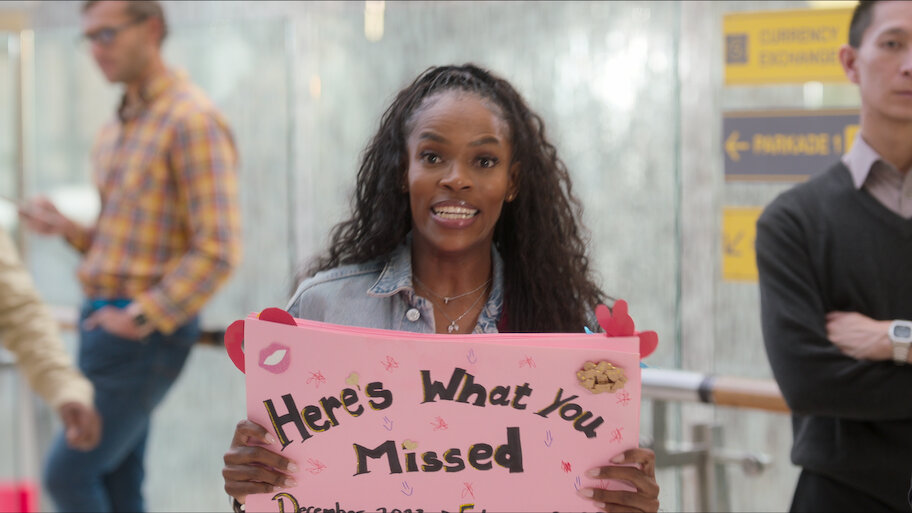
Like Blood & Water, Yoh! Bestie is set in spaces of relative privilege: trendy restaurants, modern apartments, corporate offices. The characters are upwardly mobile, educated, and aspirational.
This is not inherently problematic, but it becomes so when it is the only story being told. The show's Johannesburg is a city of opportunity and style, not of inequality and struggle. The majority of Johannesburg's residents, living in townships, informal settlements, and working-class suburbs, are invisible.
The show offers a fantasy of urban Black success that is aspirational for some, but alienating for many.

Summary
Key Analytical Points
Heteronormative Default
The show centres women but within a largely heteronormative framework. LGBTQ+ identities and non-binary experiences are marginalised.
Decorative Code-Switching
Indigenous languages appear as cultural flavour, not as primary modes of expression. English remains structurally dominant.
Urban Aspiration Bias
The show's Johannesburg is aspirational and middle-class. Township and working-class realities are largely invisible.
Aspirational Femininity
The femininity represented is urban, educated, and upwardly mobile, a narrow slice of South African womanhood.
Johannesburg-Centric
The show centres Johannesburg, erasing the diversity of South Africa's other cities, provinces, and rural communities.
Selective Visibility
Some South African women are made visible. Many more, rural, indigenous, working-class and queer, remain out of the frame.