Beyond the
Frame
What does it mean when a platform shapes what a nation sees of itself? This is where we step back and ask what must change.
The Selective Mirror:
What Netflix SA Reflects
Netflix South Africa does not represent all South Africans equally. Through its content choices, language use, and visual framing, the platform consistently privileges English-speaking, urban, and middle-class identities, while rendering rural communities, indigenous languages, and working-class realities largely invisible.
This is not accidental. It reflects the logic of global streaming capitalism, where content is produced for audiences with purchasing power, and where "South African" becomes a shorthand for a narrow, marketable identity rather than a genuinely diverse one.
The two case studies, Blood & Water and Yoh! Bestie, demonstrate how representation and language work together to construct a version of South Africa that is partial, selective, and politically loaded.
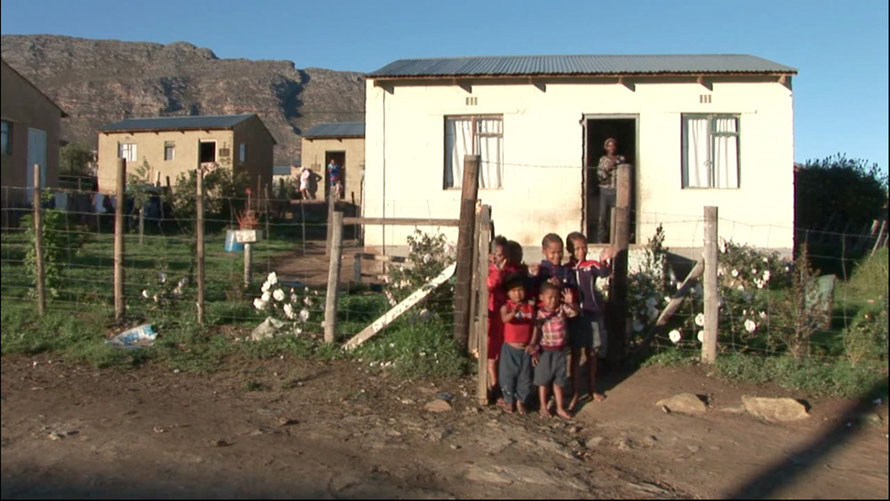
The communities Netflix SA rarely shows, yet they are South Africa too.
"Representation is never neutral. Every choice to include is also a choice to exclude."
— Central Argument
Visibility
Who is seen?
Language
Who speaks?
Absence
Who is missing?
Why This Matters
Media Shapes Identity
When people only see certain versions of themselves on screen, it normalises those versions as the default and marginalises everything else.
Language is Power
Privileging English on a multilingual platform is a political act. It signals whose voice counts, whose story is worth telling, and whose culture is "universal."
Exclusion Has Consequences
Communities that never see themselves represented begin to internalise their own invisibility. Representation is not just aesthetic. It is a matter of dignity.
What Must Change
Critique without direction is incomplete. These six recommendations address the structural failures of representation on Netflix South Africa.
Invest in Linguistic Diversity
Netflix SA should commission and promote content in all 11 official languages, not just English and occasional isiZulu. Subtitling alone is insufficient; original-language storytelling must be funded and foregrounded.
Represent Rural and Peri-Urban Realities
The majority of South Africans do not live in Cape Town or Johannesburg. Content must reflect township life, rural communities, and the full geographic diversity of the country, not just aspirational urban spaces.
Centre Marginalised Communities
Stories about LGBTQ+ communities, people with disabilities, migrant workers, and indigenous groups must move from the margins to the mainstream. Representation must be authentic, not tokenistic.
Support Independent and Community Filmmakers
Netflix should create pathways for filmmakers from underrepresented communities, not just established production houses. Grassroots storytelling produces the most authentic representation.
Adopt a Representation Accountability Framework
Netflix SA should publish annual transparency reports on language distribution, geographic representation, and community diversity in its South African catalogue, and be held accountable to measurable targets.
Collaborate with Cultural Institutions
Partnerships with universities, cultural councils, and community organisations can ensure that content reflects lived realities rather than market-driven stereotypes.
"I began this project as a viewer. I end it as a critic. The difference is awareness, and awareness is the first act of resistance."
Watching Differently:
What This Research Changed
Before undertaking this analysis, Netflix felt like a neutral space, a platform that simply offered content. This research dismantled that assumption. Every thumbnail, every language choice, every setting is a decision. And decisions reflect power.
Studying Blood & Water and Yoh! Bestie through the lens of social semiotics revealed how deeply representation is embedded in the smallest details: who speaks English, who code-switches, whose neighbourhood is shown as aspirational, whose is absent entirely. These are not incidental. They are structural.
The most significant shift this research produced is the understanding that questioning media is not cynicism. It is literacy. To ask "who is missing from this frame?" is to practise a form of critical citizenship that media studies makes possible.
Representation Awareness
Recognising that what we see on screen is always a selection, never the full picture.
Questioning Media
Developing the habit of asking: who made this? For whom? What is left out?
Language as Politics
Understanding that language choice on screen is never just practical. It is ideological.
Dignity in Visibility
Believing that every community deserves to see itself reflected with complexity and care.
The Frame Is Not Fixed
Netflix South Africa has the reach, the resources, and the responsibility to tell a fuller story. The question is whether it will choose to. Until it does, the work of naming what is missing remains essential and urgent.